
About this Tour
This 17-day journey traces China’s cultural and historical depth from the imperial capitals of Beijing and Xi’an to the Silk Road landscapes of Gansu and Xinjiang. Begin with Beijing’s Forbidden City and Mutianyu Great Wall, then continue to Xi’an for the Terracotta Warriors, Ming City Wall, and Tang-inspired cultural districts. Traveling west through Zhangye, Jiayuguan, and Dunhuang, the route follows the historic Hexi Corridor, with highlights including Zhangye Danxia, Jiayuguan Fort, Singing Sand Mountain, and the Mogao Grottoes. In Xinjiang, explore the oasis heritage of Turpan and Kuqa before reaching Kashgar, Tashkurgan, and Karakul Lake, where Islamic culture, Central Asian influences, and Pamir mountain scenery bring the journey to a distinctive conclusion.
4CanGo Small Group Program
Our 4CanGo departures are confirmed to operate as soon as four guests are booked, with a maximum of ten travelers per departure. Once the minimum is met, your trip goes ahead, so you can plan with confidence and enjoy the attentive pace that only a small group allows.
Online booking is set up for parties of four or more. If you are traveling solo or with a group of three or fewer, please contact us and we will arrange your booking directly. We are glad to build flexible arrangements around your preferred dates, group size, and travel style.
Quality of service is our priority. Every Horizon itinerary is planned by a team led by a founder with more than 20 years in the travel industry, specializing in both U.S. national park tours and international travel. We are committed to delivering a personalized and memorable journey.
About China
China is a vast and diverse country known for its rich history, ancient wonders, and vibrant traditions that span thousands of years. From the Great Wall to the Terracotta Warriors, China offers a unique blend of cultural heritage and natural beauty.
Tour Highlights
- Stand in Tiananmen Square and walk the Forbidden City, the Ming and Qing imperial palace
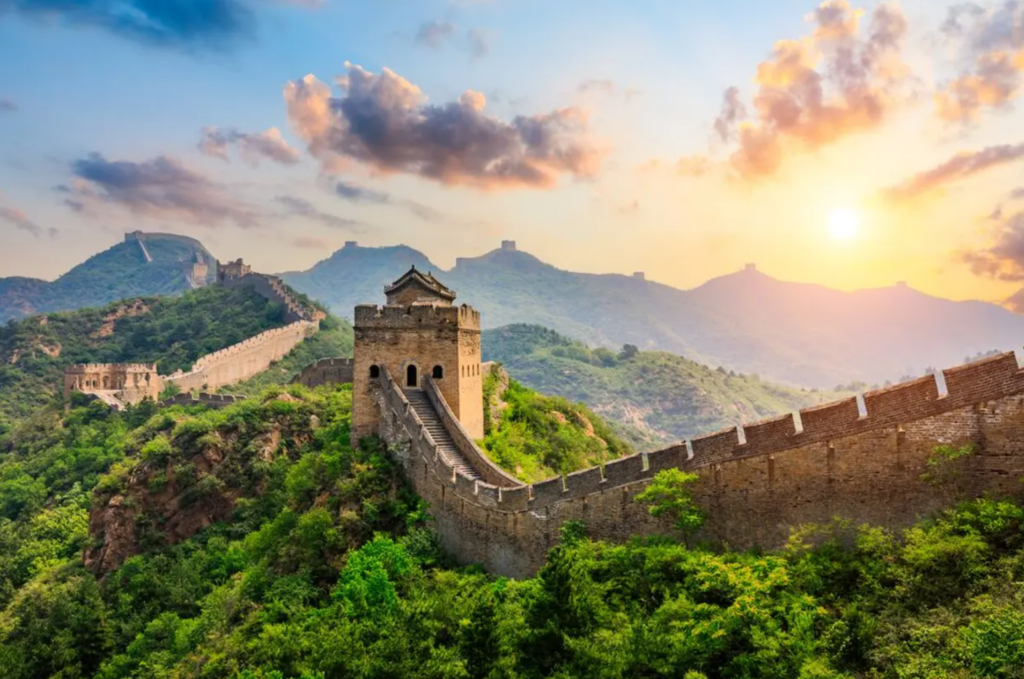
- Climb the Mutianyu Great Wall by cable car, then take tea and a performance at Lao She Teahouse
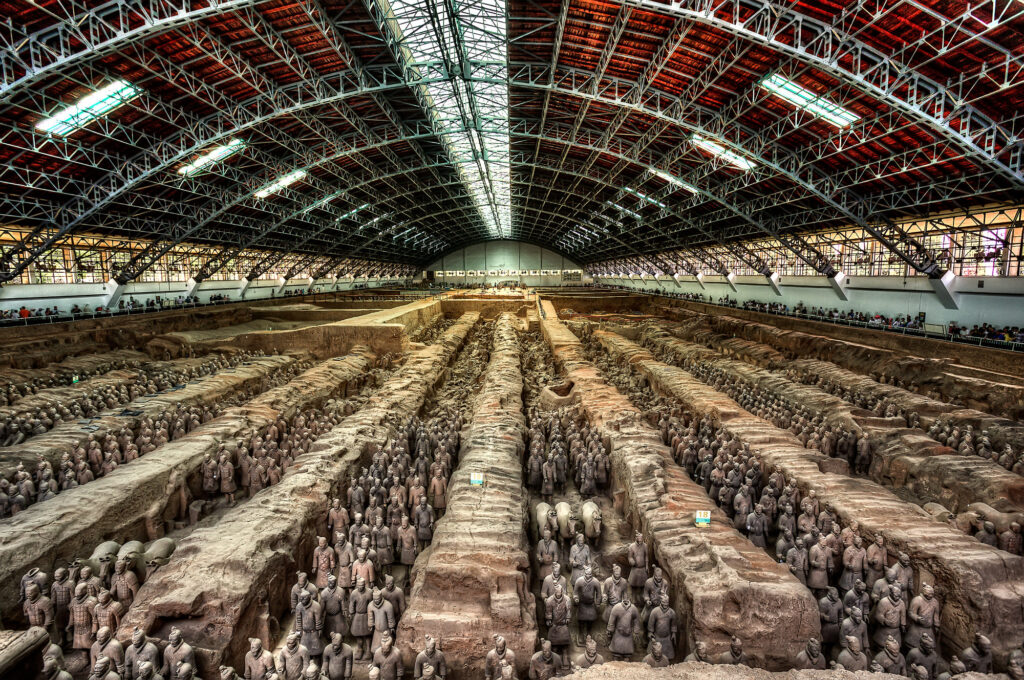
- Face the life-sized ranks of the Terracotta Warriors outside Xi’an
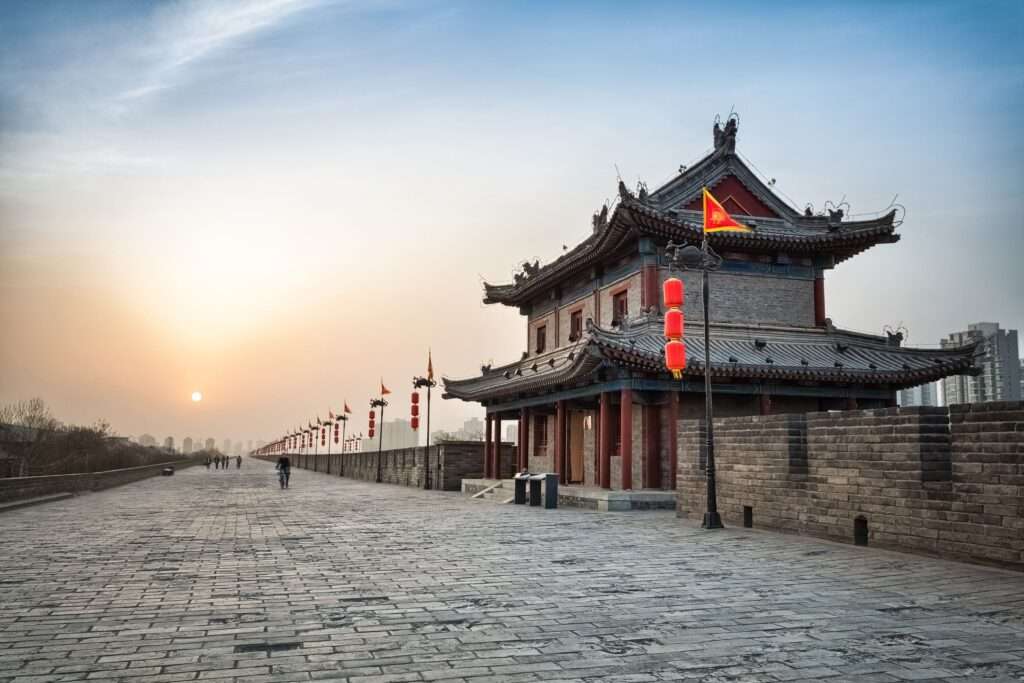
- Walk Xi’an’s Ming-era City Wall and the Muslim Quarter, ending at the Tang-styled Grand Tang All Day Mall
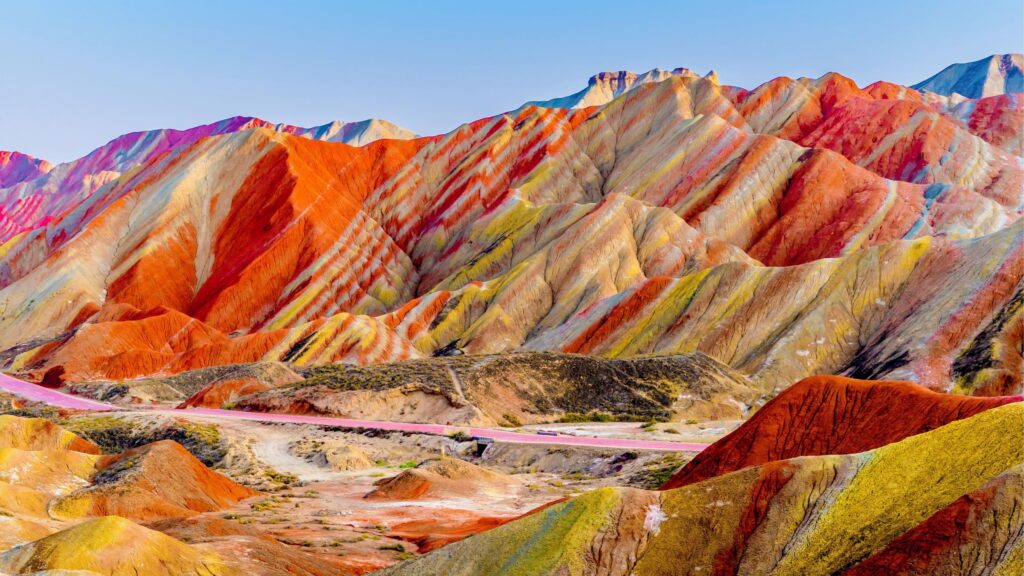
- See the banded red and gold rock of the Zhangye Danxia landform
- Explore Jiayuguan Fort, the western anchor of the Ming Great Wall at the desert’s edge
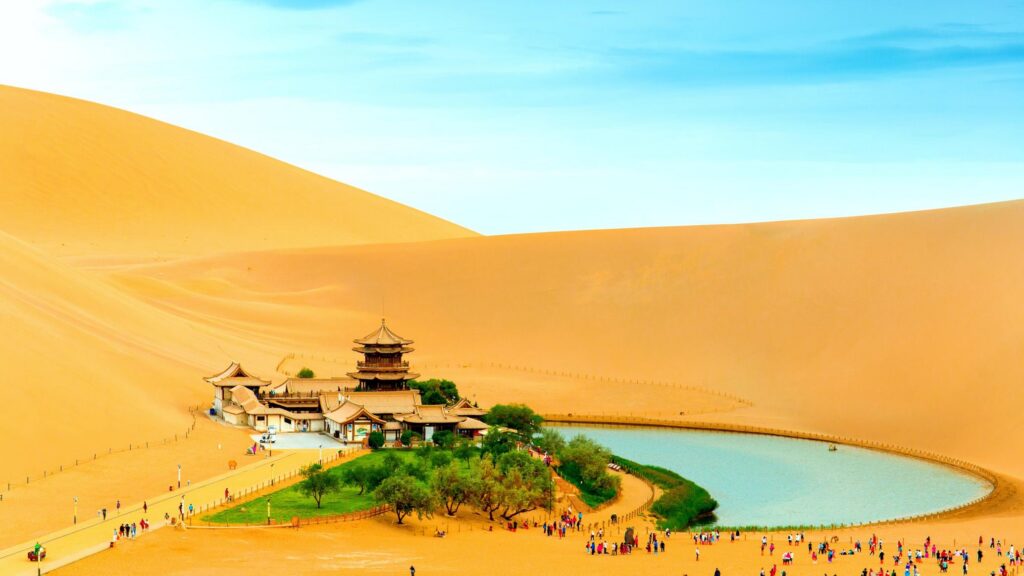
- Climb the dunes at Mingsha Mountain above spring-fed Crescent Lake
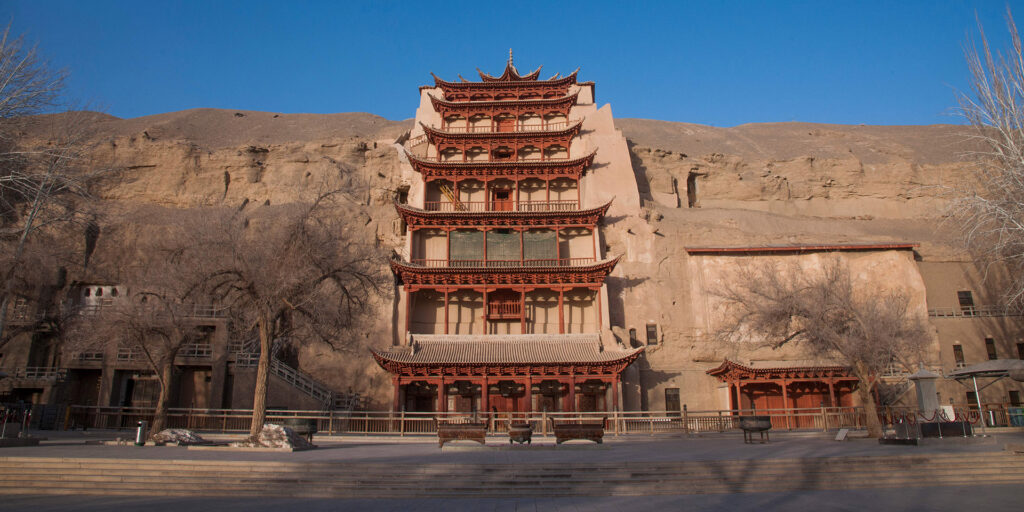
- Study the Silk Road Buddhist murals of the Mogao Grottoes at Dunhuang
- Cross into Xinjiang to the earthen ruins of Jiaohe Ancient City and the underground Karez waterways at Turpan
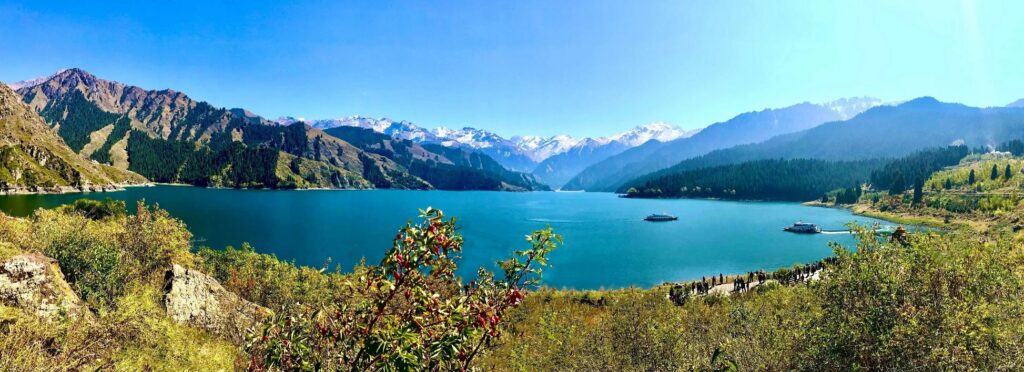
- Reach Tianchi Lake beneath the Tianshan range
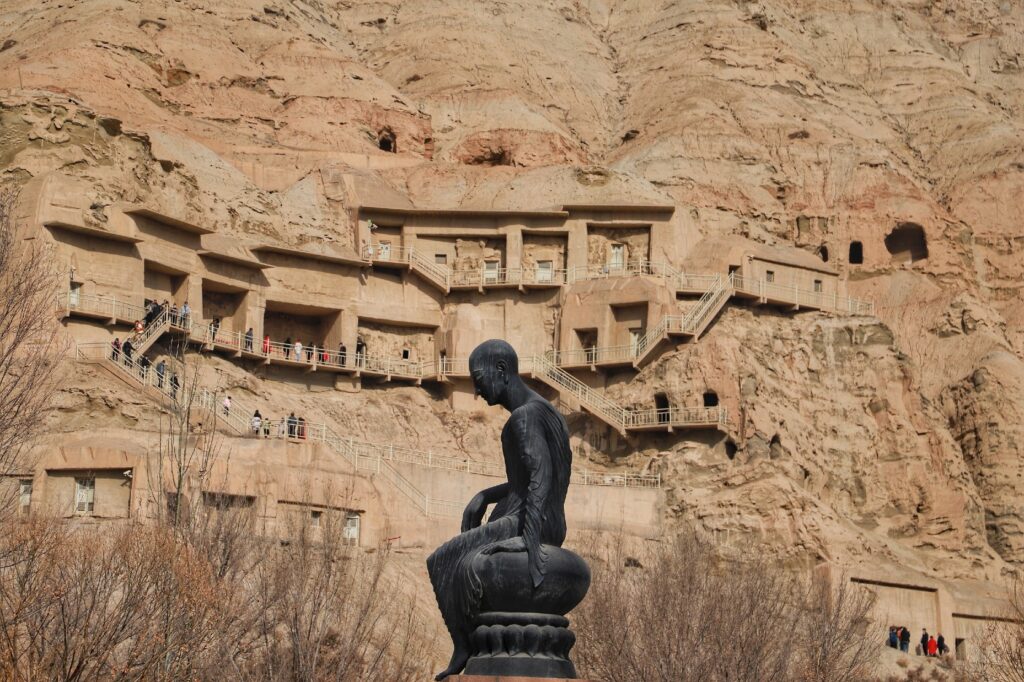
- View the Qiuci-era Buddhist art of the Kizil Grottoes near Kuqa
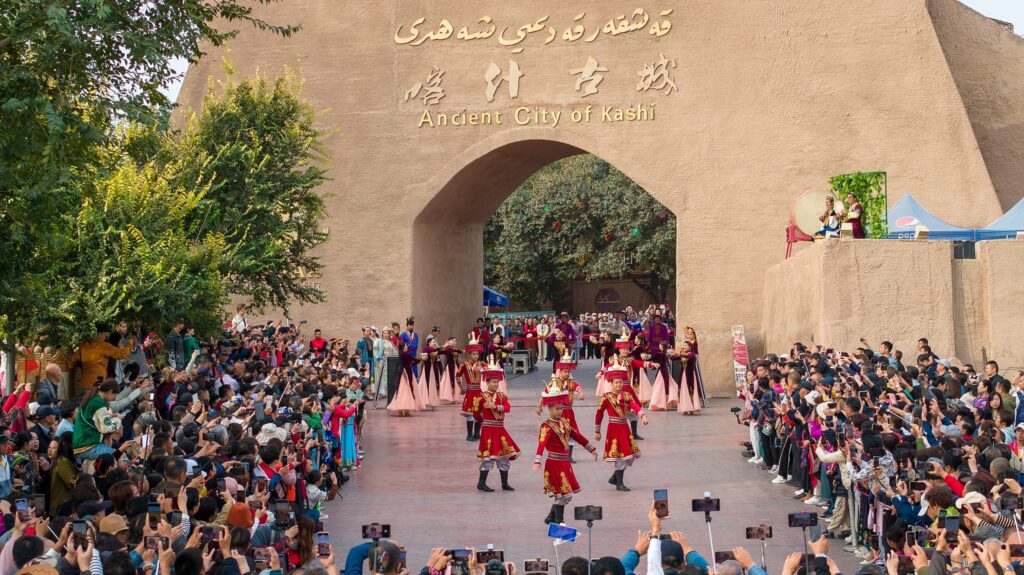
- Wander Kashgar Old Town and the Id Kah Mosque, the cultural core of China’s far west
- Drive the Pamir highlands to Tashkurgan, then mirror-still Karakul Lake below Muztagh Ata
Moments from this Tour
What’s Included
- Transportation: High-speed trains or optional domestic flights, and luxury coach
- Lodging: 4-5 Star Hotels and Cultural boutique inns
- Meals: As per itinerary with complimentary daily drinking water
- Activities and Tickets: All listed entrance fees and guided experiences as specified in the itinerary
- Tour Guide: English-speaking tour guide
What’s Excluded
- Expenses from Activities and Meals not denoted in the Itinerary
- Tour guide gratuities (recommended 10%)
- Trip and cancellation insurance
- Personal expenses
- Visa fees (if applicable)
- Single supplement
- Flight tickets outside of the tour
Itinerary
Day 1: Arrival in Beijing
Arrive in Beijing, China's historic capital and the starting point of this cross-regional cultural journey. Upon arrival, meet your local representative and transfer to the hotel for check-in.
The remainder of the day is at leisure to rest after your international flight or explore the surrounding area at your own pace, depending on arrival time.
Day 2: Beijing Imperial Heritage
After breakfast, visit Tiananmen Square, the ceremonial heart of Beijing and one of the city's most significant public spaces. Continue to the Forbidden City, the former imperial palace of the Ming and Qing dynasties and one of the world's largest surviving palace complexes.
Later, enjoy a guided city walk through Beijing's historic hutong neighborhoods. These narrow lanes and courtyard residences offer a more intimate view of traditional local life within the capital.
Day 3: Mutianyu Great Wall Experience
This morning, travel outside the city to visit the Mutianyu section of the Great Wall, known for its restored watchtowers, mountain setting, and relatively comfortable walking conditions. Cable car access is included, allowing more time to enjoy the views along the wall.
Return to Beijing and visit Lao She Teahouse, a cultural venue named after the celebrated Beijing writer. Enjoy tea, local refreshments, and traditional-style performances that reflect the city's performing arts heritage.
Day 4: Beijing to Xi'an by High-Speed Rail
After breakfast, transfer to the railway station for the high-speed rail journey to Xi'an by second-class seat. As one of China's great ancient capitals and the eastern starting point of the Silk Road, Xi'an provides an important historical contrast to Beijing.
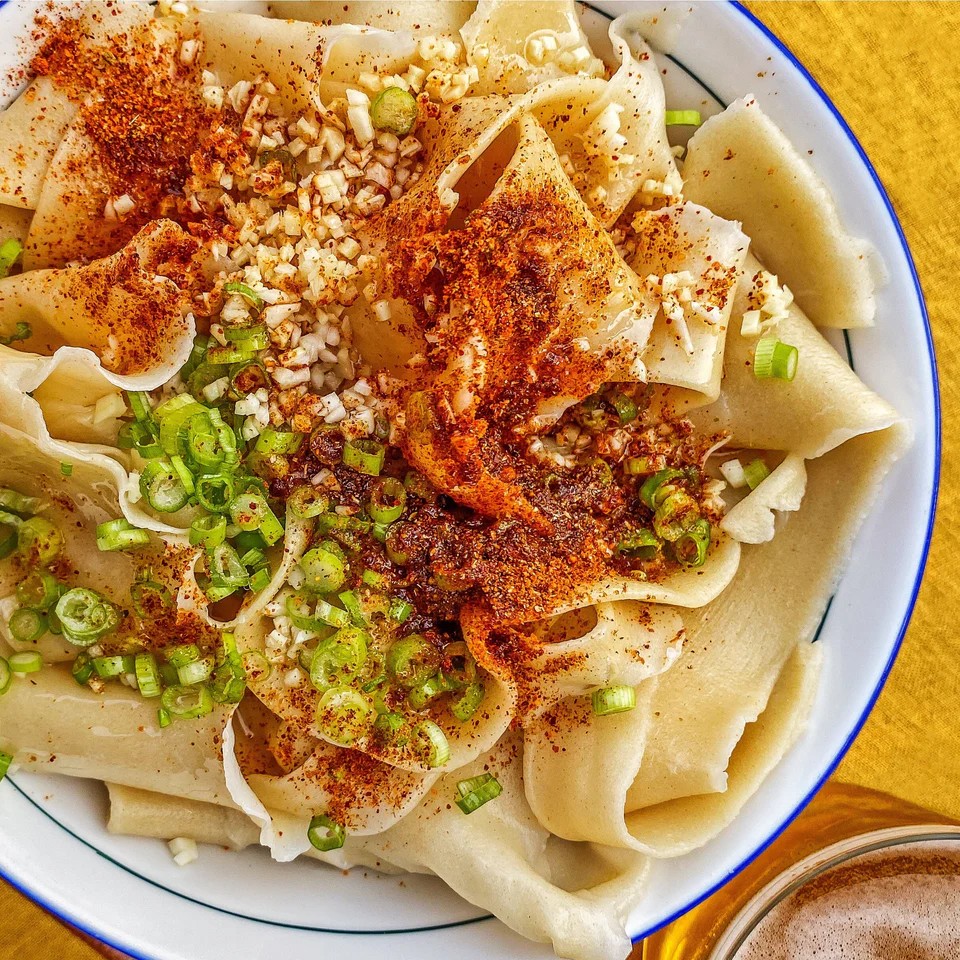
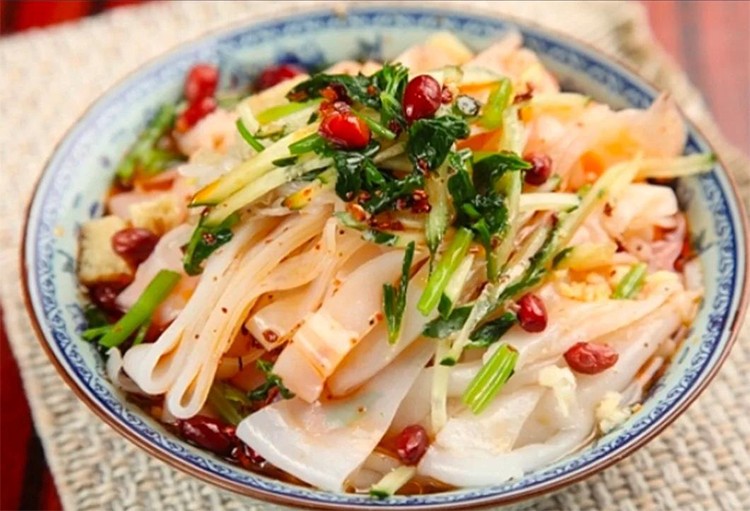
Upon arrival, visit the Ming City Wall, one of the best-preserved ancient city walls in China. Continue to Yongxingfang, a lively cultural food district where Shaanxi snacks and Guanzhong folk traditions are presented in a restored historic setting.
Day 5: Xi'an Historical Highlights
After breakfast, visit the Terracotta Warriors and Horses Museum, one of China's most important archaeological discoveries. The life-sized warriors, horses, and military formations provide striking insight into the power and ambition of China's first emperor.
Return to the city to see Bell Tower Square and explore the Muslim Quarter, a vibrant district known for local snacks and Xi'an's long history of cultural exchange. Later, visit the Giant Wild Goose Pagoda Northern Square and enjoy the evening atmosphere of Grand Tang All Day Mall, with Tang-inspired architecture, lighting, and street performances.
Day 6: Xi'an to Zhangye by High-Speed Rail
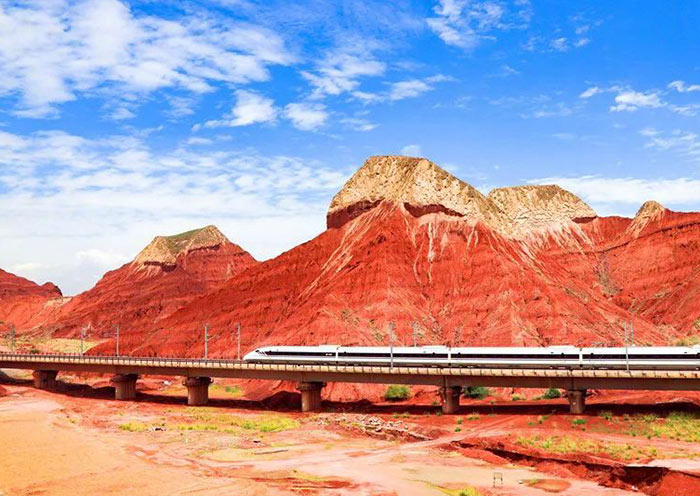
After breakfast, take a high-speed train by second-class seat from Xi'an to Zhangye, an important city along the historic Hexi Corridor. This route marks the transition from China's ancient capitals toward the landscapes and trading routes of the Silk Road.
Upon arrival, visit the Zhangye Danxia Landform, known for its layered rock formations and distinctive bands of red, yellow, white, and other natural colors. The scenic area offers a dramatic introduction to the desert-edge landscapes of northwestern China.
Day 7: Zhangye to Jiayuguan
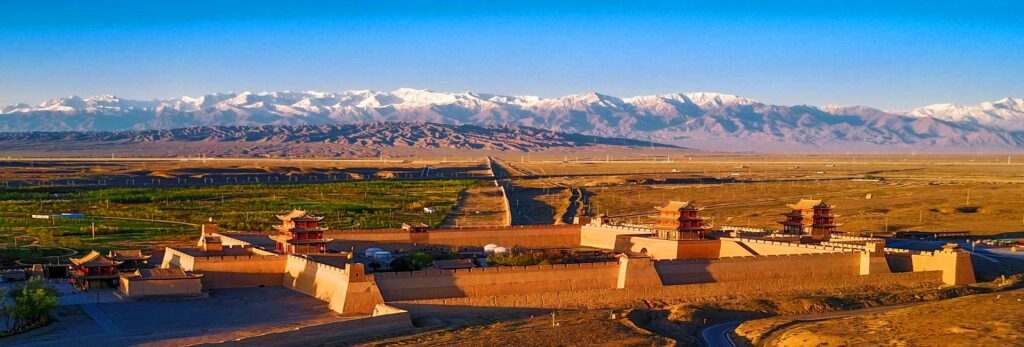
After breakfast, travel from Zhangye to Jiayuguan, a frontier city historically associated with the western end of the Great Wall. Visit Jiayuguan Fort, one of the most important military strongholds along the Ming Dynasty defensive system.
The fort's towers, walls, gates, and desert setting illustrate the strategic importance of this region, where imperial China met the routes leading toward Central Asia. Continue with visits in the Jiayuguan area before checking in at the hotel.
Day 8: Jiayuguan to Dunhuang
After breakfast, travel from Jiayuguan to Dunhuang, one of the most significant oasis towns along the ancient Silk Road. Upon arrival, visit Mingsha Mountain and Crescent Lake, where sand dunes and spring-fed water create one of Dunhuang's most recognizable desert landscapes.
The area offers a striking contrast between arid dunes and the crescent-shaped lake at their base. After the visit, transfer to the hotel for check-in and rest.
Day 9: Dunhuang to Turpan
After breakfast, visit the Mogao Grottoes, also known as the Thousand Buddha Caves. Located at the western end of the Hexi Corridor, this remarkable Buddhist art site preserves centuries of murals, sculptures, and religious imagery shaped by Silk Road exchange.
After lunch, continue the journey westward from Dunhuang to Turpan. The move into Xinjiang marks a clear shift in landscape, cultural atmosphere, and historical context.
Day 10: Turpan to Urumqi
After breakfast, explore Jiaohe Ancient City, one of the best-preserved ancient earthen city ruins in the region. Continue to the Karez irrigation system, an ingenious underground water network that reflects the practical intelligence of oasis life in an arid environment.
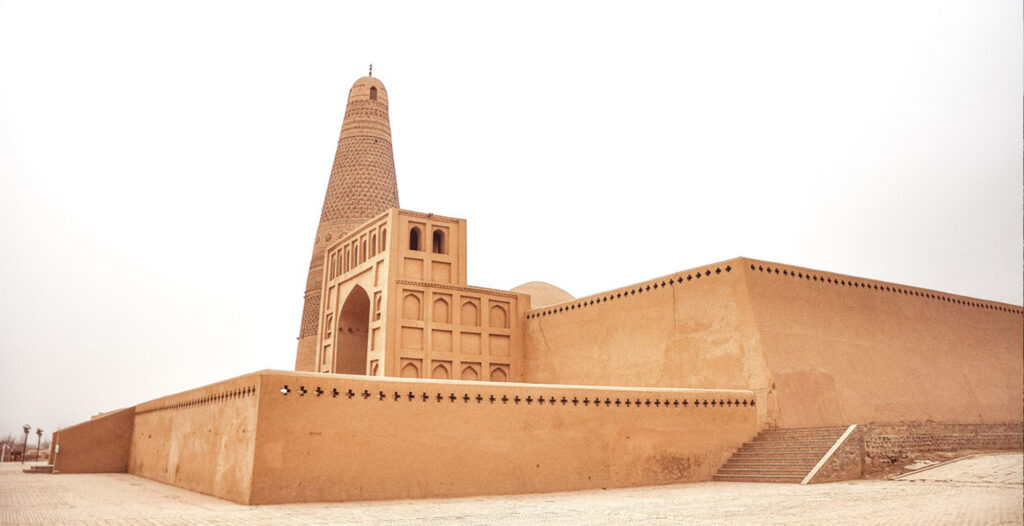
Visit Emin Minaret, also known as Sugong Pagoda, before traveling to Urumqi. Upon arrival, explore the International Grand Bazaar, a lively marketplace combining local commerce, ethnic architecture, food culture, and regional crafts.
Day 11: Urumqi Museum, Tianchi Lake & Overnight Train to Kuqa
After breakfast, visit the Xinjiang Regional Museum, subject to opening arrangements, as it is normally closed on Mondays. The museum provides useful context on Xinjiang's archaeology, ethnic cultures, and Silk Road history.
Continue to Tianchi Lake, a high-altitude lake set against the Tianshan Mountains. Later, transfer to the railway station for the overnight train to Kuqa.
Day 12: Kizil Grottoes & Tianshan Grand Canyon
Arrive in Kuqa in the morning and begin the day with a visit to the Kizil Grottoes, one of the important sites associated with the ancient Qiuci culture. The grottoes reflect Buddhist artistic traditions and Central Asian influences along the Silk Road.
Later, continue to the Tianshan Grand Canyon, located in the Kizilya Mountains, a branch of the Tianshan range. The canyon is known for its red cliffs, narrow passages, and distinctive geological formations.
Day 13: Kuqa Heritage & Overnight Train to Kashgar
After breakfast, visit Kuqa Palace and the Kuqa Grand Mosque, an important Islamic architectural site in Xinjiang. These visits introduce Kuqa's layered history as an oasis city shaped by local rule, religion, and Silk Road contact.
Continue with a walk through the old city area to observe local streets and community life. Later, transfer to the railway station for the overnight train to Kashgar.
Day 14: Kashgar Old Town
Arrive in Kashgar in the morning, one of the most atmospheric oasis cities in western China. Visit the Id Kah Mosque, a major Islamic landmark and an important gathering place in the city.
Continue into Kashgar Old Town, where narrow lanes, traditional houses, workshops, and local markets reflect the city's distinctive Central Asian character. Also visit the Tomb of the Fragrant Concubine, a mausoleum associated with Islamic heritage and regional history.
Day 15: Kashgar to Tashkurgan
After breakfast, travel by vehicle from Kashgar to Tashkurgan County, located near China's western borderlands and historically connected with routes toward Central Asia. The journey introduces the highland landscapes of the Pamir region.
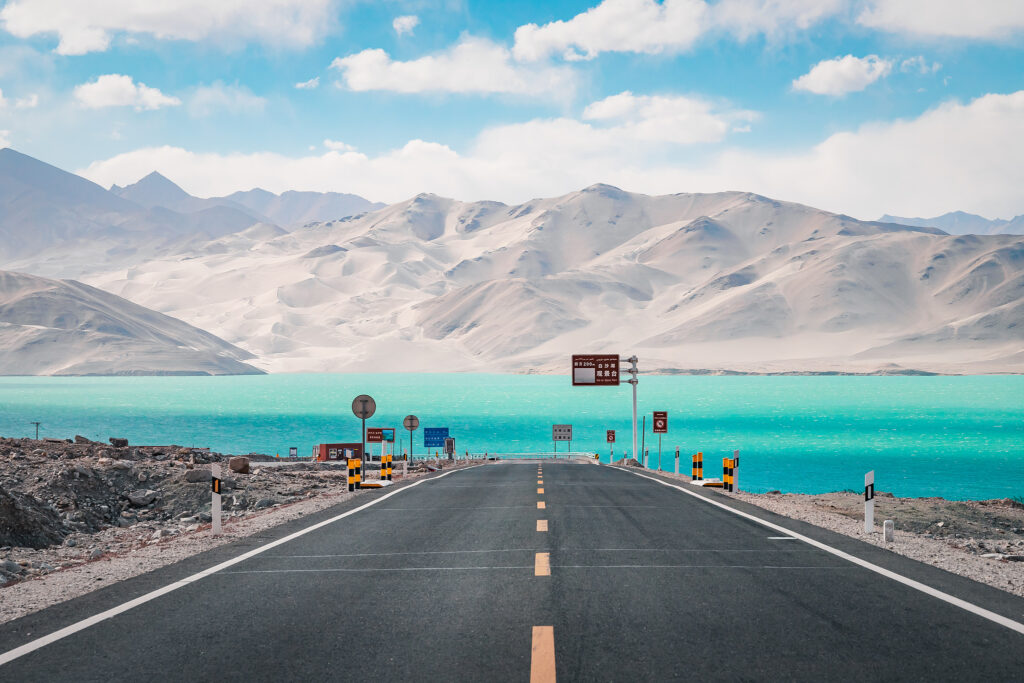
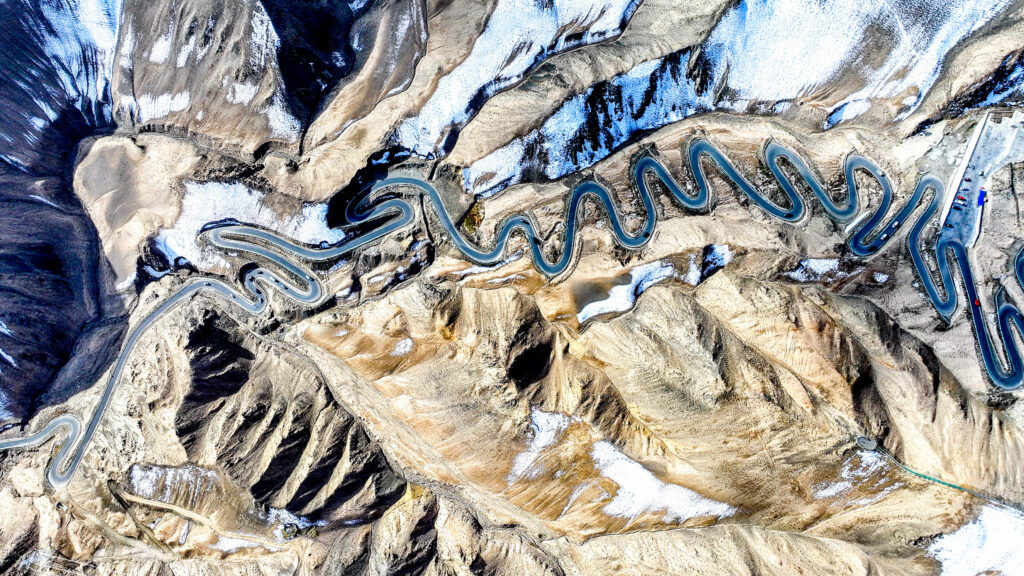
En route, visit Baisha Lake and the Panlong Ancient Road, also known as the Wacha Highway. The winding mountain road and wide plateau scenery create a powerful sense of geographic transition from oasis city to high mountain frontier.
Day 16: Karakul Lake & Return to Kashgar
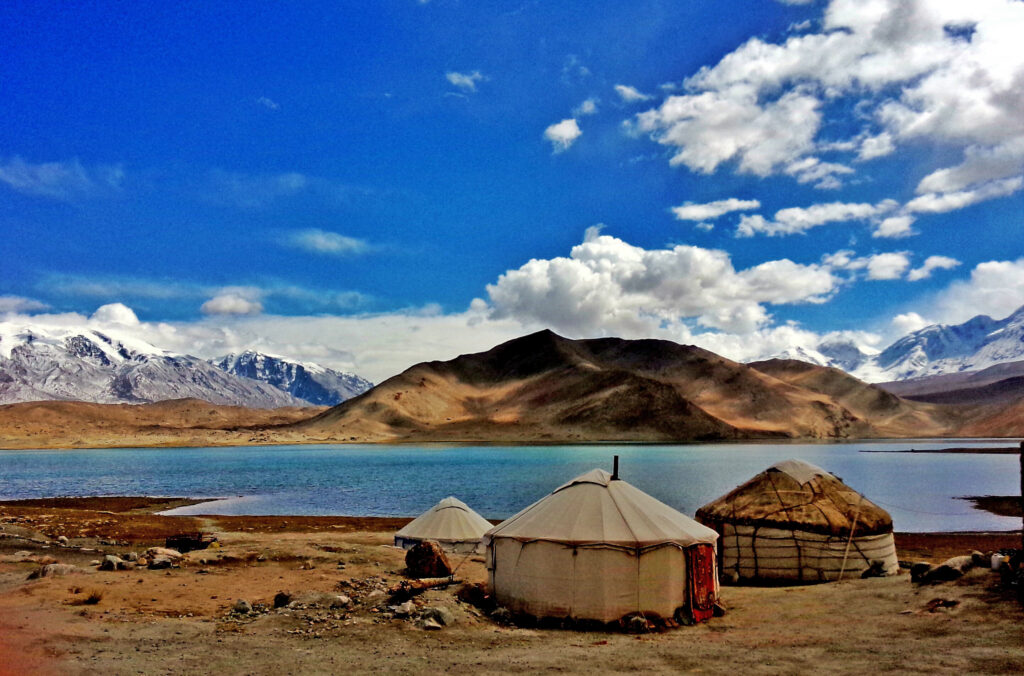
After breakfast, return by vehicle toward Kashgar, with a visit to Karakul Lake en route. Set near the foot of Mount Muztagh Ata, the lake is known for its reflective waters and views of snow-covered peaks on clear days.
The day combines high-altitude scenery, plateau landscapes, and the cultural atmosphere of the Pamir region before returning to Kashgar for the final overnight stay of the journey.
Day 17: Kashgar to Beijing Departure
After breakfast, transfer to the airport for your domestic flight from Kashgar to Beijing. Upon arrival in Beijing, connect with your international departure flight.
This concludes a wide-ranging journey from China's imperial capitals to the Hexi Corridor, Dunhuang, Xinjiang's oasis cities, and the mountain landscapes of the Pamir region.
Itinerary Note: To ensure the best possible travel experience, the order of visits and daily arrangements may be adjusted by the guide based on local conditions, railway schedules, flight schedules, opening hours, weather, traffic, visitor flow, and operational considerations. All key included experiences will be arranged as appropriately as possible throughout the journey.
Accommodation Selection
Hotels are selected for their location, facilities, service standards, and overall guest experience, rather than by formal star classification alone. Star ratings, where referenced, follow local standards and are provided for general reference only. Hotel assignments are finalized for each departure based on availability and operational requirements, with selections made to maintain the intended level of comfort and overall guest experience.
Age Requirements
Travelers under 18 must be accompanied by a parent, legal guardian, or authorized adult responsible for their supervision and well-being throughout the tour. All travelers should be able to safely and comfortably participate in the itinerary.